

More High School Basketball Season Thoughts
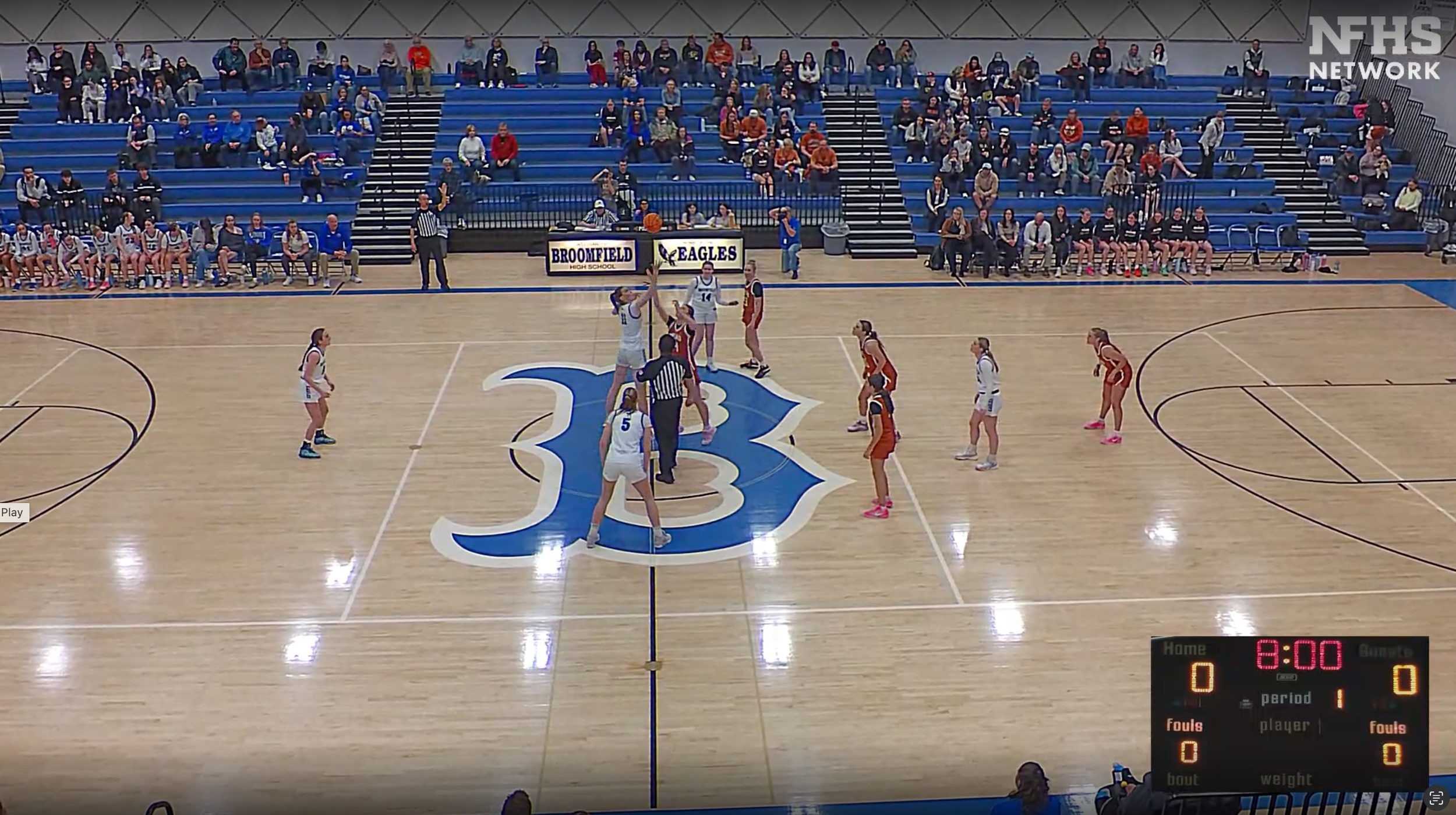
Mead High School (CO) vs Broomfield High School on February 17, 2026.
Many questions but often fewer answers. This is a collection of thoughts from the context of the 25-26 high school season.
February 26, 2026
Down here in South Georgia, the weather has started to warm up (since having written Part 1) after a particularly cold January and early February. Regardless of weather, the topics below remain issues to consider. In some cases, I give answers to the issues at hand. With others, it is more closely defining the issue with true solutions harder (at least in our current environment) to come by.
Interwoven in many of the seemingly unrelated topics below are the concepts of striving for excellence, it being ‘ok to finish second,’ pushing forward ‘win or lose,’ and finally returning to values of integrity, loyalty and honest communication that have become lost in America.
But first, WNBA 2026 Draft – deeper than a lot of years!!
Not too many years ago for one particular draft class, I described a WNBA draft as “nothing times nothing is still nothing.” Simply put it was a very weak draft class. The 2026 class appears to be somewhat the opposite with depth that may land a team significant help into the bottom half of the first round (now 15 picks with this year’s addition of two teams). Look for names like Betts, Fam, Fudd and Miles somewhere near the top of the board but there will be help below that if a team’s front office has done its homework properly. For now, let’s leave it at that!
Now getting gloomy!
Fired for not winning it all!
With a greater and greater emphasis on first or bust, coaches at the pro and college levels are being terminated for less than first place finishes. In bygone times, college coaches kept their jobs if they graduated their players and avoided bad press for the university. As more money has entered the sport at the college and pro levels, there has become less tolerance for anything but a first-place finish. And sadly, this win or bust mentality is seeping down into the prep sports ranks, re-enforced by talking heads in the media. Coaches should be judged by long term performance rather than the “what have you done for me lately” of today.
What can be done to lessen the upheaval in college sports?
Integrity, loyalty and communication are three concepts that have been foundations for being part of an institution of higher learning during and after graduation. Now they have been replaced in all too many division 1 major sports programs by a ‘hired gun’ mentality, where player financial compensation is the ruling currency. A society is a balance between the ‘we’ (three concepts above) and the ‘me’ and America today is more ‘me’ than ever.
There is no simple solution. NIL is probably here to stay and the rich are only likely to get richer. So, let’s start with what could be done. Limit free transfers to one after which there are penalties. Second, all payments to players must be spelled out in contracts which can hold up in court. These are hardly cure-alls but a reasonable start.
Society needs more of ‘two plus four does not equal six’ and less of the urge to ‘reclass downward!’
In the history of American youth sports, there has never as much of the urge to hold student/athletes back in middle school or where possible, early high school to “fatten up” the athlete’s chances of getting a sweeter financial package from colleges. Once you get below the major D1 conferences, the money dries up relatively quickly. The idea is that the extra year before college will significantly improve the particular student-athlete’s chances of landing in the money.
While this plan does appear to have been right in a number of cases, it is now being used excessively. In women’s basketball most players are going to eventually find their level in college after an initial adjustment at college #1 or via portal transfer. Ideally, those guiding the student-athlete have a realistic idea of the level the player in question can thrive in. Unfortunately, a lot do not and fall victim to the ‘re-class game.’
Rather than having society have a growing portion of its student-athletes losing time reclassing, I have proposed (so far with zero success) that student-athletes be allowed to go to junior college for up to two years and then transfer to a four-year school with similar eligibility as if coming out of high school. Bottom line is America would be better off with more young people coming into the job market with a master’s degree than having spent an additional year repeating middle school English and math (which is becoming more and more common today). Life is more important than sports and those staying longer than necessary in high school lose a year of adult life (which at 78 I can tell you is very precious!!).
And for that matter, at what age should colleges be allowed to offer scholarships to young players?
For all too many Division 1 programs it has become fashionable to offer players as young as in 7th grade. I understand for many being the first offer is seen as improving chances of being a finalist for a theoretically prized recruit. Does anyone think of what it can do to the young recruit’s psyche?
The player can go from being humble and hungry to instead feeling entitled and having “made it.” In reality, there is still a tremendous amount of improvement in skill and/or body development needed to succeed at the college level. Some players get relatively good at a very young age but then their games do not progress, thus making the ‘offering school’ hope the once prized recruit goes elsewhere. And also, in a world where coaches come and go, the ‘offering coaches’ may not even be at that college four years down the line!
Although it would be very difficult to enforce, in a more perfect world it would be best if no college scholarship offers were extended until a student-athlete begins grade 10!
Homing in on high school issues of today…
Is the USA really three nations when it comes to high quality NFHS Federation state-series high school girls’ basketball?
Currently, to me the answer is yes! There is California with tremendous quality as to its high school federation (CIF) teams. Just look at national rankings during 2025-2026. I am not sure what is going on over there, but they should bottle it and sell it to the rest of America!
Then there is New England. The six-state region no longer exists from a national high school poll perspective. All but a very few D1 bound juniors and seniors are by then in the prep school world of the NEPSAC which quietly re-classes (holds many of them back a year), and thus the various national ranking polls do not consider those schools. I do not believe a New England Federation high school has been ranked nationally in about ten years. If girls’ basketball high school rankings polls continue not to recognize the NEPSAC, this non-recognition is likely to continue for the foreseeable future.
Note: I personally favor two polls: One for state-series NFHS schools and one for the academy and prep ranks (with no-concern for re-classing, just results!).
And finally, there is the rest of the USA with a patchwork of fluctuation of strengths state to state year to year. Generally, one can count on much individual talent to come out of Texas although its Federation (UIL) high school team depth has been hurt by the rise of “academy ball.” Conversely, one can count on underproduction from New York State when it comes to cranking out a share of high-level talent in proportion to its population. It has been this way for decades.
Is high school basketball dying as a place to develop talent in America?
If you are looking for the “hometown hero” mentality, the answer is trending to a ‘yes.’
Each year we are seeing the rise of more ‘academy’ settings either as part of an overall athletically oriented multi-sport institution (think IMG), or ones based heavily on online education with some to no in-person instruction.
Sadly, public schools are having to make hard choices with school boards ever more budget conscience. As one public school administrator told me “We can get all the competition that our girls’ basketball team needs locally. It takes time (sometimes months) to get travel out-of-state approved. Our budget is tight to begin with, and our town is not that wealthy. So, what is the point?”
In more and more places (New England where I grew up is one of the worst), public schools consider D1 parents and their student-athlete offspring ‘troublemakers’ if they lobby to go to out-of-state tournaments or showcases. One NEPSAC coach told me that the NFHS State Member organizations of New England loved them as they have largely taken away this “D1 basketball parent problem.”
Most recently, I heard that the Wisconsin Interscholastic Athletic Association (WIAA) now has a rule which docks a team two games from its schedule (24 max becoming 22) if it plays in an event beyond a contiguous state. In much of the Midwest, it is ‘stay local and stay in your lane’ that is widely promoted, unlike both coasts with more teams traveling to seek out better competition. State officials in restrictive Midwest states claim travel to prestigious out-of-state events takes away from the aura of the state tournament plus it discriminates against smaller schools. Where travel beyond contiguous states is allowed, I find neither to be true nor striving for excellence should not be discouraged!
More specifically, for decades, the states of Iowa and Kansas have not allowed any games to be played during the entire Christmas break when some of the most prestigious national events are held. The Federations of Indiana, Iowa, Kansas, Michigan, Minnesota and Vermont have various rules which restrict out-of-state travel beyond a certain distance. Maryland’s federation (all public schools) has travel restrictions while Maryland the private schools do not.
In the current era, major D1 colleges are now paying their players either via revenue sharing and/or deals that must go through the NCAA’s “NIL Go” protocols. There is also the dream of an expanding WNBA with exploding salaries. With these now in the minds of more high-school-age girls, the players and those who guide them are more and more looking for situations which will give them the best chance to reap those financial rewards and that is less and less likely a public school.
A most ominous comment came to me a few months back when I spoke to a group of players new to the “academy scene.” I asked for comparison between their current academy situation and prior year when they all played in federation state-series ball. The spokesperson for these four girls commented “We get more intense coaching, play with better players and play against stronger competition than in federation state-series ball of the prior year.” The concluding remark was the most telling “If I knew then what I know now, I would have come for two years of academy ball, not one!”
Will ‘illegal’ uniforms ever end, accurate rosters be posted and all schools be made to post stats?
High school coaches fear being scouted as much as anything. Here are three moves to help that plan, sometimes done with purpose and sometimes just out of a lack of concern to cover all things with full professionalism.
Tactic #1
Teams are attired in ‘illegal’ uniforms (little to no contrast between numbers and background). This is done so anyone watching online will struggle to identify all the players’ numbers. While a few states have cracked down on the rule of contrasting colors between numbers and the background, most just look the other way more concerned that the jerseys are tucked into the uniform.
Tactic #2
Avoid posting fully accurate rosters online. Some teams list none or no grade or height. Another trick is to leave off the name of the star player entirely. Hilariously, some rosters online still have names of players currently finishing up college. This is mostly out of neglect but can be viewed as a tactic to confuse/ bewilder a scout as to who is really on the roster.
Tactic #3
More teams than not fail to post stats online (often found on more general sites like MaxPreps or state particular sites like NJ.com). Coaches argue that stats give away too much information about their team. If everyone was required (with penalty as I am told Iowa does) to post team player stats, that would put things on an equal footing and allow recruitable players yet another avenue/venue (leaders in not just points but rebounds, assists, blocks) to be recognized. It would also demonstrate more concern for the sport, something lacking in too many states.
If nothing else, it would be nice from a historical viewpoint if accurate player rosters and stats were posted at season’s end even if not otherwise required.
And for that matter, what constitutes a high school team?
The question sounds simple but since Covid-19 the answer has had to change with the times.
To qualify as a team representing a school, all players must be under the same academic and athletic supervision. Thus, you can be a school if representing the traditional ‘brick and mortar’ building, or if all the students congregate in one campus location and do strictly online or hybrid (combination of in-person and online) instruction. If even one player is receiving academic oversight by a different administrative body, the team immediately morphs into a “year-round” club team. Similarly, if all the players go to the same school but compete under a different name (even more so if the school has a team competing under its own name), that too will make them a ‘year-round’ club team. There is nothing wrong with this. It is just not a true high school team. And to have, year-round club teams ranked in polls vs traditional NFHS schools is a bit ridiculous, but this has occurred on the boys’ side in the recent past in the name of recognizing talent.
Do State Federations want better competition or just hand out more trophies? Class explosion in some states is diluting competition!
Sadly, several state federations have taken girls’ (and probably boys’) basketball in the wrong direction. In recent years, North Carolina, Ohio and Texas have all added multiple classes to their states’ post-season. Perhaps this is justified in other sports but in the world of girls’ basketball, it just diluted the competition amongst teams in the name of “everyone gets a trophy.”
Both Florida and Georgia in prior years expanded the number of classes for their post-season play. ‘Running clocks’ at Florida’s state tournament probably convinced them to retreat from nine to seven classes (still probably too many) and last year Georgia pulled back from seven to six (close to right at this point). Although it is not likely to happen due to bureaucracy wanting to keep things simple, each sport should be looked at separately as to what is the right parameters of student numbers are needed to reach the best competitive equity.
In general, football may need more classes, but basketball probably needs less. Sadly, in too many states what is done with football’s post-season has to be copied as much as possible in basketball in the name of bureaucratic simplicity. The way America works today is to make more trophies (more classes to win) available but if a coach does not finish first at whatever level, put strike-one next to the coach’s name.
Sometimes just winning is enough. “Talent traps/exterminators”
There are well-stocked high school teams which in the eyes of some may have underachieved in a particular year. Still, when a ranked team beats them, pollsters look more at the margin of victory than just the ‘W’? I have sometimes called those underachieving but talented teams “exterminators.” Their prior results will prevent them from being nationally ranked. However, in any one game, they have the talent to beat a team that is nationally ranked (knocking them out of the rankings). Just beating an “exterminator” in and of itself can be an accomplishment.
Final thought
Life is combination of a conveyor belt and roller coaster. At birth, you come on to the conveyor belt called ‘life’ and along the path, experience the highs and lows (think roller coaster). As much as possible, you want to spend more time in the ‘highs.’ Now late in life, I can tell you all that a healthy and productive retirement period (doing what you enjoy with people you enjoy being around) is certainly a ‘high’ in life.May all of you who read this have many that are productive/enjoyable!